

What Is Transfer Die
Transfer die is a type of metal stamping die used in the production of complex metal parts. It is designed to transfer the metal part from one station to another during the stamping process, with each station working on a particular feature of the part. Transfer dies are typically used when a part requires multiple operations to be completed and the speed and efficiency of the production process are essential. These dies are commonly used in automotive and aerospace industries for the production of components such as engine blocks and transmission parts.
Benefits of Transfer Die
Consistent Quality
Transfer dies are designed to produce parts of consistent quality, reducing defects and ensuring that products meet the required standards of quality.
Speed and Efficiency
Transfer dies can produce multiple parts at the same time, increasing production speed and reducing cycle time.
Design Flexibility
With transfer dies, manufacturers are able to create complex parts that would be impossible to manufacture with traditional die manufacturing methods.
Improved Accuracy
Transfer dies provide high precision and accuracy in part production, resulting in minimal waste and accurate and uniform dimensions.
-

Transfer die is a kind of die to pass over the material in every stations by mechanical arms or
Add to Inquiry

Why Choose Us
The Company's Business Philosophy
People-oriented, quality first, sincere communication, honest management, and the spirit of continuous innovation, dare to challenge, self-reflection and self-revolution, provide customers with professional products and services
Expertise And Experience
Our team of experts have years of experience in delivering high quality services to our clients. We hire only the best professionals who have a proven track record of delivering exceptional results.
Quality Assurance
We have a rigorous quality assurance process in place to ensure that all our services meet the highest standards of quality. Our team of quality analysts checks each project thoroughly before it is delivered to the client.
Customer Satisfaction
We are committed to delivering high quality services that exceed our clients' expectations. We strive to ensure that our clients are satisfied with our services and work closely with them to ensure their needs are met.
Customer Service
We earn your respect by delivering on time and on budget. We built our reputation on exceptional customer service. Discover the difference it makes.
One-stop Service
We promise to provide you with the fastest reply, the best price, the best quality, and the most complete after-sales service.
Transfer die stamping stands out among metal stamping techniques. It considers each component as a separate unit from the beginning, detaching it from the metal strip or sheet as the first step. This contrasts with progressive die stamping techniques. As a result, it's capable of producing pieces with complex design features like threading and ribs. Transfer die stamping can also produce deep-draw components since there is no attachment to the base metal strip. These qualities distinguish transfer die stamping as a specialized technique for difficult and unusual metal stamping applications.
the final view of project
The stamping process of transfer dies is similar to that of progressive tools; however, the portion is free from any type of metal strip. Instead of feeding the element through its entire series of stations, the mechanical transport system is used here for moving the parts from station to station. The transfer dies include several dies, single die, or machines that form the entire line of production.
The transfer press process starts with a metal strip fed into the initial station wherever the blank is cut. The blank then gets transferred through the varied forming stations mechanically. The stamping process is highly versatile, featuring several parts such as cut-outs, pierced holes, chamfering, knurls, ribs, and threading designed into the primary operations.
There are a few examples that are used in this transfer die stamping process, including


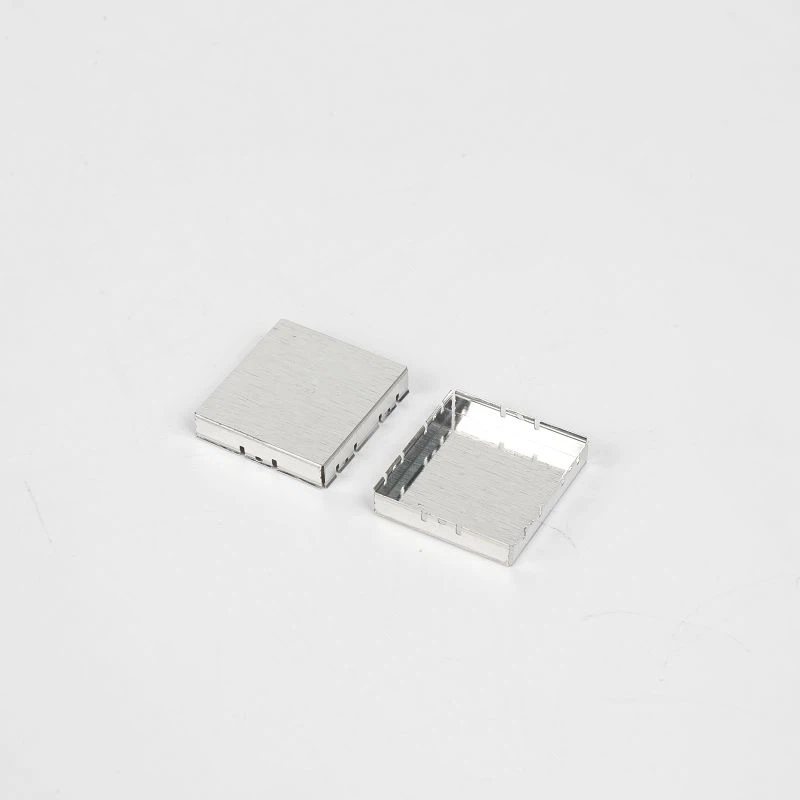
Massive parts that need transfer among other presses to get completed
Structural and frame components
Tube applications and more
The metal stamping process offers value additions as required. There are different benefits involved with the customization of the tools, including reliability, compatibility, ownership, and customization. Customization portions are your primary choice whenever these attributes matter for your projects.
Compatibility With Components
The stock elements often fail to align with the rest of the products. To ensure better compatibility, you have to customize the part's fabrication. In getting it done, you can ensure that the parts meet your project's shape and size. Whenever you work with transfer die, you get to pick from the different metals and customization options to make sure that the fabricated parts are compatible with the elements they are working with.
Reliability
Customized parts benefit from working with the engineering and design teams throughout the process. The products meet the manufacturability and cost requirements you are setting. Additionally, you can depend on the performance of the parts during use since you know that they meet the standards of progressive tools.
Greater Accuracy
The reliability of the part stems from the assurance of the accuracy of its creation. The professional customization services meet your needs and include adhering to better tolerances you require. Even while using the parts under proprietary situations; including medical devices or robotics applications, it needs reliable functionality based on the formed parts as you understand that the customized parts will perform accordingly.
Higher Durability
Durability is a necessity for various industries. For example, aerospace application needs components that are better fitted and work under rough environments of moisture and temperature extremes. The customization allows you to select durable materials to meet the part's purpose. Selecting the materials for part fabrication for withstanding the intended conditions which is the other way in which the customizations excel over the use of the standard parts.
Complete Part Customization
You may only have the option of adding the holes or selecting the finishes with the standard parts. Whenever you customize metal stamping elements, you can streamline each aspect of the creation, and you are not alone in this process here. The stamping manufacturers will help you with the customization of the parts. Their services include assisting with the design, selecting the best materials, identifying the finishes, and more.
Proprietary Ownership
You will gain the proprietary right to the parts, unlike any other standard ones you obtain through the transfer die stamping process. Metal stamping processes are used for better yields whenever the die is crafted for the parts.
When selecting transfer die stamping for custom parts manufacturing, several critical considerations come into play
Complexity of Parts: Transfer die stamping suits intricate designs and tight tolerances. The method is effective for parts requiring multiple operations and intricate detailing.
Material Choice: Different materials might require specific stamping considerations. For instance, certain alloys or materials might demand specific die materials or temperature control during stamping to ensure accuracy and prevent material distortion.
Tolerance Requirements: Transfer die stamping offers high precision, often achieving tolerances within ±0.002 inches or better. Understanding your project's tolerance requirements is crucial in selecting the proper stamping method.
Production Volume: This method is well-suited for medium to high production volumes due to its efficiency and rapid production capabilities. For large runs, the initial tooling cost can be justified by the per-part cost reduction in high-volume production.
Tooling Cost and Lead Time: Tooling for transfer die stamping can be more complex and costly than other stamping methods, and the lead time for tooling creation should align with project deadlines.
Material Waste and Efficiency: Transfer die stamping minimizes material waste due to its precision, which benefits cost-efficiency and sustainability goals.
Secondary Operations: Consider whether secondary operations (bending, threading, or assembly) are necessary after stamping. Transfer die stamping can often integrate these operations into the stamping process, enhancing overall efficiency.
Surface Finish and Quality: Assess the surface finish requirements for the parts. Transfer die stamping generally yields excellent surface finishes, but specific finishes or textures require additional processes.
By evaluating these factors, Neway can leverage the advantages of transfer die stamping in producing high-quality, precise custom parts efficiently and cost-effectively.

When To Use Transfer Die Stamping
Transfer die stamping isn't a good option for low production volumes or small, simple products. It's simply too expensive to set up. You should also consider alternatives if you need high precision. However, it excels at creating substantial, robust, and complicated parts and structural elements at a quick rate. Given its efficiency and quality, transfer die stamping is ideal for applications involving shells and tubes.
What Are the Materials Suitable for Transfer Die Stamping
Transfer die stamping is a versatile fabrication process that can be used on more than just metals. The choice of suitable materials depends on what you expect from your finished product. Common materials for transfer die stamping include:
Metals: Metals are the most common materials in stamping due to their malleability and ductility. This category includes precious metals like silver, gold, and platinum, ferrous metals like stainless steel, non-ferrous metals such as bronze, brass, and zinc, as well as non-standard alloys like beryllium nickel and beryllium copper.
Paper: Paper can be stamped for applications like decorative artwork or packaging.
Leather: Leather can be stamped with intricate designs.
Rubber: Rubber gets stamped to create things like gaskets and seals.
Ferrous metals, like stainless steel, are most common because they're so cost-effective. Each material comes with its own unique design considerations.


What Lies Ahead on the Use of Transfer Die Stamping
The future of transfer die stamping holds several promising developments. Firstly, advancements in automation and robotics will increase precision and efficiency, reducing production costs. Furthermore, advancements in materials science will allow for the stamping of complex and lightweight materials so the process can be expanded in aerospace and automotive spaces. Additionally, data analytics and AI will optimize tooling and process parameters, enhancing quality control and reducing waste. These trends suggest a bright future for transfer die stamping in manufacturing.
Die manufacturing: Definition, types, & the die making process
Upper and Lower Shoes
Upper and lower shoes are the base where all other die components are attached, and they are typically made of cast iron or steel. Die shoes must resist deflection during the operation of the tool.
Guide Pins and Bushings
Guide pins and bushings are critical components that maintain the locating ability of a die. Guide pins are typically made from hardened steel and attached to one of the die shoes, entering the bushings found on the opposite shoe to locate the two die halves. Bushings tend to be made from a softer material, impregnated bronze, to promote wear on the bushing instead of the pin.
Punches
Punches are the male features that work with a die steel to impart the value-added shape to the material. Punches can be used as forming or cutting tools, depending on their needed application. Forming and cutting punches are made of tool steel to combat the high wear the details endure.
Die Steels and Cavities
Die steels and cavities are the opposite, or female, shape of punches; these details also help shape the material. For forming tools, they essentially mirror the punch plus material thickness. The shape is also mirrored for cutting steels but is offset larger to accommodate punch-die breakage. This offset allows proper cutting clearances and the cut material to fall through the tool.
Stripper Pad
This component's primary function is to pull or strip the material off the punches after the press has cycled to the bottom. Usually driven by springs, but sometimes solid, the stripper springs are compressed during the downstroke of the press. During the upstroke, the springs return to their original length, pushing the stripper pad and the material off the working punches.
Stop Blocks
Aligned with die webbing and parallels, these details help prevent catastrophic damage to the tool during a crash event. It is also common to have a slot ground at the top of the block that is used for die set-up.
Pilots and Gauges
Pilots and gauges help locate the strip or a blank before cutting and forming occur.
Springs
Nitrogen, coil, or neoprene springs are used to apply holding pressure to the part, strip the part off the tooling, or return details to a home position.
Our Factory
Gingerm Industrial Co., Limited was found in August of 2016, who locates in Songgang Town, Bao'an District, Shenzhen City and occupies in area more than 1,000 square meters. We are close to the Shenzhen Bao'an International Airport, Shenzhen Airport Ferry Terminal and Shekou Ferry Terminal. Before that, we were a professional supplier of designing and manufacturing precision stamping dies for Electronic field, and then turned to engage in an ODM / OEM supplier with providing both the precision stamping dies and stamping parts. The tools and dies that Gingerm supplies includes but are not limited to progressive die, transfer die, compound die and stage dies(blanking, piercing, drawing, forming, trimming, etc.); The fields that Gingerm serves included and are not limited to electronic appliances, mobile phone appliances, new energy appliances, circuit board shields, Spring contacts, metal brackets and drawn parts.

Certificate

FAQ
We're professional transfer die manufacturers and suppliers in China, specialized in providing high quality products with low price. We warmly welcome you to buy customized transfer die made in China here from our factory.
rolled steel bar, metal mantel brackets, stainless steel neoprene washers