

What Is Metal Brackets
A metal bracket is a fastener or connector designed to secure and hold two pieces or objects together. They are used to support shelves, stabilize equipment, fasten uprights, or serve as decorative accents. Metal brackets come with or without holes and can be threaded to allow screws to be attached. They are hardware products designed to hold pieces together, enable doors to be opened and closed, and can have hasps for locking an enclosure.
Advantages of Metal Brackets
Metal brackets are the standard tools for the support of beams, shelving, cupboards, and cabinets. They are resilient and strong components capable of holding heavy loads safely with failure or damage.
Durability
Metal brackets are made of high-quality stainless steel, which makes them strong and durable. They can withstand the forces of orthodontic treatment without breaking or bending.
Corrosion Resistance
Metal brackets made from stainless steel, aluminum alloys, and galvanized steel are resistant to corrosion, which is an important factor in applications where exposure to moisture or other corrosive substances is likely.
Versatility
Metal brackets can be designed and manufactured to fit a wide range of applications, from orthodontics to aerospace to manufacturing.
High Temperature Resistance
Some metals used in metal brackets, such as titanium and certain stainless steel, can withstand high temperatures, making them suitable for use in high-temperature applications.
Customizability
Metal brackets can be designed and manufactured to meet specific requirements, such as size, shape, and weight.
Easy To Maintain
Metal brackets are easy to clean and maintain, as they do not stain or discolor over time.
-

The metal screen door lock is mainly used for installation and fixing of large outdoor screens.
Add to Inquiry -
In life, we often contact with a variety of electronic products, including televisions, computers,
Add to Inquiry -
There are many types of metal brackets. Some are applied to the automotive industry, some are used
Add to Inquiry -
The flat metal bracket, as the name implies, are the brackets without forming angle. Mostly they
Add to Inquiry -
Right angle metal brackets are generally used as assembling structure parts, which play a role in
Add to Inquiry -
The angle metal bracket refers to brackets with a certain forming angle. Compared with right-angle
Add to Inquiry -
The shaft metal bracket is one of the installation brackets, which is used by fitting and mating
Add to Inquiry -
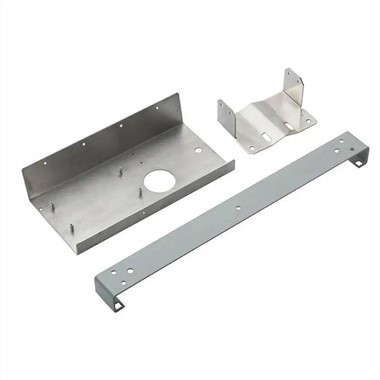
Metal mounting brackets are generally produced by using iron, aluminum, and stainless steel
Add to Inquiry




Customer Service
We earn your respect by delivering on time and on budget. We built our reputation on exceptional customer service. Discover the difference it makes.
The Company's Business Philosophy
People-oriented, quality first, sincere communication, honest management, and the spirit of continuous innovation, dare to challenge, self-reflection and self-revolution, provide customers with professional products and services
Expertise And Experience
Our team of experts have years of experience in delivering high quality services to our clients. We hire only the best professionals who have a proven track record of delivering exceptional results.
Quality Assurance
We have a rigorous quality assurance process in place to ensure that all our services meet the highest standards of quality. Our team of quality analysts checks each project thoroughly before it is delivered to the client.
Customer Satisfaction
We are committed to delivering high quality services that exceed our clients' expectations. We strive to ensure that our clients are satisfied with our services and work closely with them to ensure their needs are met.
One-stop service
We promise to provide you with the fastest reply, the best price, the best quality, and the most complete after-sales service.
The sizes, shapes, angles, and complexities of metal brackets vary to fit the needs of an endless number of applications. Metal brackets are found at the heart of structural designs due to their dependability, durability, strength, and adaptability. They are a type of hardware that can fit the needs of shelves, ships, buildings, and cupboards and are a dependable tool used by designers, engineers, and architects.
Angle Brackets
Angle brackets are L-shaped and used to reinforce where corners and joints meet. They are an adaptable metal bracket that can meet the needs of any type of structure. The key to the strength of angle brackets is the metal from which they are made.
Corner Brackets
Similar to angle brackets, corner brackets are used to reinforce or join corners. They come in a variety of shapes with some types having extra supports that connect the legs of the bracket. Corner brackets are used in woodworking, construction, and furniture manufacturing to add strength and stability to joints and connections. They are available in a wide variety of shapes, sizes, and metals and are referred to as corner braces.
Flat Brackets
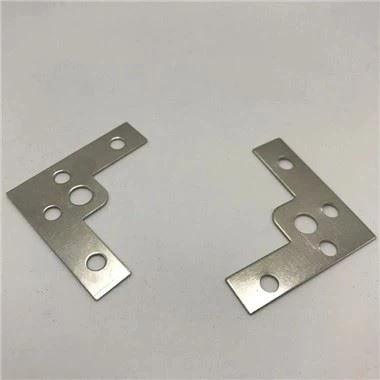
Flat brackets are a form of hardware that have a rectangular shape with holes or slots for screws or bolts. They are used to join or reinforce surfaces and are made of several different types of metal. Flat brackets are available in varying sizes and thicknesses with some being 12” long. L shaped flat brackets serve the same purpose as rectangular flat brackets but are two rectangles that take the shape of the letter L.
T-Brackets
T-brackets have perpendicular arms that extend from a vertical section to form the letter T. They are reinforcement, supportive, and stabilizing brackets that are used to join two or three beams and are made of several types of metals. T-brackets are essential for framing, building shelving units, and support of machinery.
U-Brackets
U-brackets are bent along two axes to take the form of a U and are used to grip flanges or mount horizontal pieces. They have two arms that form the open end of the U that extend from their curved base. The arms can be attached to walls, beams, or polls to offer stability or hold objects in place. U-brackets are hardware used for framing, shelving, mounting, and bracing as well as keeping wires, pipes, and tubing secure.
Z-Brackets
Z-brackets, known as mounting brackets, mount or suspend objects from a wall by being attached to the wall’s studs. They provide support and mounting for heavy large items that can be difficult or cumbersome to attach. Z-brackets are a form of safety measure that prevents loads from shifting or falling.
Applications Of Metal Brackets
Metal brackets find applications across various industries and sectors due to their versatility and reliability. Here are some key areas where metal brackets are extensively used
Construction And Architecture
Metal brackets are integral components in construction and architecture. They provide essential support, stability, and reinforcement in structural frameworks, such as buildings, bridges, and towers. Metal brackets are used for connecting beams, trusses, and columns, ensuring the structural integrity of the entire construction.
Furniture Assembly
In furniture manufacturing and assembly, metal brackets are crucial in joining different components. They provide strength and stability to furniture pieces like tables, chairs, cabinets, and bed frames. Metal brackets ensure durable connections and contribute to the overall longevity and functionality of the furniture.


Automotive Industry
Metal brackets are widely used in the automotive industry for various applications. They support and reinforce vehicle components, such as chassis, suspension, and exhaust systems. Metal brackets in the automotive industry are designed to withstand high loads, vibrations, and harsh operating conditions.
Electrical And Plumbing Installations
Metal brackets are essential in electrical and plumbing installations. They provide secure mounting for electrical boxes, conduits, and piping systems. Metal brackets ensure proper alignment, stability, and safety in these critical systems, preventing damage and ensuring efficient operation.
Components of Metal Brackets
The use of metal brackets extends to the full gamut of applications from workshop shelving and home decorations to support for industrial tools and equipment. They are an essential hardware that is a part of structural designs and ornamentation. Regardless of their use, brackets have certain structural components in common.
Base Plate
The base plate is a flat or curved part of the bracket that is used to attach the bracket to a surface. It is at the bottom of the bracket to provide stability, support, and a solid connection. Most base plates have holes for screws, bolts, or common fasteners to attach it to the surface. Other types of base plates come without holes to allow the user to place holes where needed.
Base plates are made of a variety of metals and come in different sizes to meet the needs of the application. The critical factor in regard to base plates is their size, which has to be sufficient to support the support arm and the load.
Support Arm
The support arm of a metal bracket extends from the base plate and supports an object, structural component, or holds a piece in place. The type of support arm varies according to the application with some support arms being thick, heavy, and placed at different angles. As with all aspects of metal brackets, support arms come in different sizes, configurations, and metals.
Mounting Holes
Mounting holes are stamped, drilled, or cut into the support arm and base plate for attaching the bracket to the wall surface using screws, bolts, and other types of fasteners. The placement, size, shape, and diameter of the mounting holes varies according to the location and purpose of the metal bracket.
Most metal brackets have standard sized holes that are properly placed for optimum support. The design and placement of mounting holes is determined by the type of load and the needs of the application. Metal brackets without holes make it possible for the user to space the mounting holes according to their needs.
Fasteners
Common types of fasteners are screws, bolts, rivets, and nuts, which are made of steel, stainless steel, brass, or aluminum. The purpose of the fasteners is to form a strong, sturdy connection capable of withstanding the stress, force and load of the application. The factors used to determine the choice of fasteners are the environment, requirements of the load, and compatibility with the metal bracket.
Stainless steel, aluminum, or galvanized steel fasteners are used for high humidity environment applications while bronze or brass are used for the same plus decorative purposes. The installation of fasteners includes having the proper torque settings, tightening, and tools.
Bracing
Bracing is added to the support arms or crossbars of a metal bracket for extra support and stability. Since metal brackets are used for structural support for beams and joists, they are subjected to differing loads, such as bending, tension, compression, or torsion. Bracing is added to to ensure a bracket can withstand the demands of the load and include:
- Gussets: Gussets are welded or bolted to the bracket to increase its rigidity and resistance to bending or torsion.
- Flanges: Flanges provide support against shearing forces.
- Cross Bracing: Crossing bracing is metal rods connected to the bracket at different angles to increase resistance to tension.
- Welding: Welding is a fastening method the ensures an exceptionally secure and durable connection.
Adjustment Mechanisms
How a metal bracket is adjusted depends on its application, the type of bracket, and its design. Metal brackets are selected to fit a specific application but may need adjustments during or after installation including alignment, leveling, or spacing. When a metal bracket has bolts, screws, or braces, they can be easily adjusted. Metal brackets that have been secured by being welded in place require special equipment, devices, and expertise to be adjusted.
- Bolts or Screws can be loosened or tightened to change the position of a bracket to align it properly.
- Shims can be inserted between the base and the support surface or between the support and the load. They are normally used to level the bracket with the load.
- Bracing adds strength and stability to metal brackets as well as function as a means of adjustment for balancing and leveling a bracket.
What Materials Are Suitable For Making Metal Brackets


Stainless Steel: Stainless steel brackets are resistant to corrosion and have good physical qualities. Hence, they are prevalent in high-humidity environments, such as orthodontic applications. In addition, stainless steel brackets also ensure robust construction in building structures.
Aluminium: The aluminium bracket is the most affordable and sturdy of all bracket kinds. It’s also lighter than stainless steel brackets. When lightweight and corrosion resistance are both important, aluminium is an excellent option. In addition, aluminium is receptive to various finishing procedures if you require additional surface treatment.
Galvanneal: The surface of this steel product has a zinc-iron alloy coating as a result of the continuous hot dipping method. Galvanneal has a matte matt grey appearance and does not flake off when forming and bending. The porous surface of galvanneal works well as a foundation for locking in paint components. Galvanneal brackets not only paint well and are anti-corrosive, but they are also excellent for welding and shaping.
Copper: Copper’s distinctive appearance makes it the ideal material for producing a beautiful bracket. Copper brackets are not only aesthetically pleasing, but they are also capable of supporting a fair amount of weight.since copper brackets strike a good balance between beauty and functionality, they make wonderful ornamental decors.
Cold-rolled Steel: Cold-rolled steel metal brackets are appropriate for general-purpose enclosures. These brackets are inexpensive, highly weldable and rigid, making them an excellent choice for supporting heavy loads. That is why most external air condition units rely on cold-rolled steel brackets as support.
How Metal Brackets Are Manufactured
The many different styles, shapes, thicknesses, and metals of brackets require the use of several different manufacturing methods. The choice of production methods include casting, stamping, CNC machining, laser cutting, and extrusion. With all forms of metal brackets, finishing, which involves coating, polishing, painting, and plating, is the key to the appearance and properties of metal brackets.
Casting
Casting is a manufacturing process where a molten metal is poured into a mold and allowed to solidify. This process is used to create metal brackets with complex and intricate shapes that would be difficult or impossible using other methods. Cast metal brackets are made from a wide range of metals, including aluminum, brass, bronze, steel, and stainless steel.
CNC (Computer Numerical Control) Machining
CNC machining is a technological process that uses a set of commands fed into the controller of a CNC machine. The commands guide a set of tools to cut, shape, and form metal brackets. The process of CNC machining begins with a computer generated rendering created by a designer or engineer. The parameters of the design are downloaded into the CNC machine that converts them into a set of codes that tells a set of tools what procedures to perform.
The original CNC machine was referred to as Numerical Control (NC) and was developed to increase the precision in the production of helicopter blades in the 1940s. As technology grew and innovations increased, NC control was taken over by computers. The development and growth of CNC machining has drastically impacted the performance of production processes and the tolerances of completed products.
Stamping
Stamping or pressing forms metal brackets by transforming a flat sheet of metal into the shape of the metal bracket. Using a stamping or machining press, sheets of metal are blanked, embossed, bent, flanged, and coined. It is a flexible process that is capable of shaping any type of metal. Stamping is cost-effective and capable of rapidly producing large quantities of metal brackets.
The four main types of stamping are progressive stamping, transfer die stamping, fine blanking, and four slide stamping. Progressive stamping and transfer die stamping involve a set of stations where the piece of metal is carried from station to station and are used for metal brackets with several bends. Fine blanking is used to achieve flatness and sheared edges. With four slide stamping, four different tools shape the metal bracket at the same time.
The three types of stamping presses used for stamping are mechanical with a flywheel, hydraulic with a hydraulic cylinder with hydraulic fluid, and mechanical servo that uses an electric motor. All three types of presses use extreme force to reshape a flat sheet of metal or blank.
Extrusion
Extrusion is a process where a piece of metal, referred to as a billet, is forced, under pressure, through a die profile that determines the dimensions and thickness of the metal bracket. The metal billet, which normally pretreated to increase its plasticity, is placed in a long heat cylindrical tube where a ram forces it against the die. The shaped metal brackets coming out of the die as long pieces that are cut to the proper size after cooling.
The process of extrusion is used to shape non-ferrous metals, such as aluminum alloys, copper, brass, magnesium, and bronze, which can be extruded hot or cold. Metal brackets produced by extrusion come in a wide range of sizes and configurations and is one of the reasons for its popularity as a production method.
Laser Cutting
Laser cutting is a cost effective method for the production of custom metal brackets with intricate and complex shapes. The process uses a laser to cut metals with exceptional accuracy and tolerances. Much like CNC machining, laser cutting begins with a computer rendered design that is downloaded into the laser cutter, which directs the high powered laser beam.
The mechanism of the laser has a motion control system or transforms the instructions from the computer design into a system of codes that guide the laser. The metal bracket cuts are clean and precise without burn marks or scorching. Once the bracket is complete, it is removed from the laser cutter and allowed to cool. Laser cutting is typically used in low volume or processes where expensive stamping tool costs can be eliminated.
Factors That Affect Metal Brackets Hardware Selection
The choice of metal bracket used as a support or connector will depend on the application and the requirements of that application. The factors that influence the decision are load capacity, environmental conditions, and the surface where the bracket will be installed
Load Capacity
The load capacity refers to the amount of weight a metal bracket can safely support without failing and is influenced by the design, size, structure, and type of metal of the bracket. The most popular metal brackets are made of steel, stainless steel, and aluminum, which have a load capacity of up to 500 lbs. Metal brackets are the most durable, long lasting, and reliable.
Environmental Concerns
The environment where a bracket is placed is a critical aspect of its use since corrosive and harsh conditions can severely shorten the usefulness of certain metal brackets.
Moisture, heat, and exposure to the elements affect their performance. Ones that are used outdoors are made of metals that are resistant to rust and corrosion.
Size and Shape
Along with the load, the size and shape of the material to be supported plays an important role in the selection of metal brackets. This aspect of metal bracket is the reason that they are so widely used since there is a size and shape of a bracket to fit every set of conditions and applications.
Installation Requirements
The traditional method for installing a bracket involves the use of screws or bolts using a drill, screw driver, and level. Some brackets, such as those for special applications, require special tools or hardware. Metal bracket manufacturers provide clear instructions as to how to install their products and the necessary tools.
Cost
The cost of metal brackets varies according to their materials, their size, load capacity, and use. Although cost is a major concern for all forms of tools, metal brackets must be selected based on their function since less expensive brackets may be more costly due to their failure. Additionally, the initial cost of a bracket may be higher but can be amortized over time due to their longer usefulness.
Compatibility
It is also important to ensure that the bracket is compatible with the other components of the system. Metal brackets used to support a pipe or conduit need to be compatible with the size and shape of the pipe or conduit. Additionally, ones used with other hardware or fasteners have to blend and fit with those components.
Durability
Durability of metal brackets is a major consideration since they must be capable of withstanding the stress of their load over time without bending, breaking, or being damaged. This is especially important for metal brackets used in high stress applications or environments where they are exposed to harsh conditions.
Maintenance
Maintenance is usually not a major issue with brackets since they are the type of component that is installed and ignored. It is only in threatening and hazardous conditions that brackets have to be carefully monitored since failure in those situations can be unsafe and dangerous.
Decorative Aesthetic
The selection of metal brackets for the decorative or aesthetic value still falls under the categories of size, load capacity, shape, and metal. An additional aspect that comes with this concern is the style and eye appeal of a metal bracket such that it fits into the decor of the environment. These decisions are normally made by architects, designers, and interior decorators.
Our Factory
Gingerm Industrial Co., Limited was found in August of 2016, who locates in Songgang Town, Bao'an District, Shenzhen City and occupies in area more than 1,000 square meters. We are close to the Shenzhen Bao'an International Airport, Shenzhen Airport Ferry Terminal and Shekou Ferry Terminal. Before that, we were a professional supplier of designing and manufacturing precision stamping dies for Electronic field, and then turned to engage in an ODM / OEM supplier with providing both the precision stamping dies and stamping parts. The tools and dies that Gingerm supplies includes but are not limited to progressive die, transfer die, compound die and stage dies(blanking, piercing, drawing, forming, trimming, etc.); The fields that Gingerm serves included and are not limited to electronic appliances, mobile phone appliances, new energy appliances, circuit board shields, Spring contacts, metal brackets and drawn parts.

Certificate

FAQ
We're professional metal brackets manufacturers and suppliers in China, specialized in providing high quality products with low price. We warmly welcome you to buy customized metal brackets made in China here from our factory.
l bracket iron, aluminum square tube fittings and brackets, s shaped metal bracket