

What is Metal Stamping
Metal stamping is a process of forming metal sheets into desired shapes or parts using a stamping press and dies. The process involves placing the metal sheet between the dies and applying pressure to form the desired shape. This can be used to create parts such as brackets, panels, housings, and other industrial components. Metal stamping is widely used in automotive, aerospace, electronics, and appliance industries.
Benefits of Metal Stamping
Cost-effective: Metal stamping is a cost-effective manufacturing process because it can produce high volumes of identical parts in a short period of time.
Sustainability: Metal stamping is a highly sustainable manufacturing process that uses minimal raw materials, generates less waste, and consumes less energy compared to other methods.
Precision: Metal stamping requires a high degree of precision, which makes it suitable for creating complex shapes and designs. The precision of the process also ensures that the parts produced are consistent and of high quality.
Versatility: Metal stamping can be used to create a wide range of products, from simple flat parts to complex shapes with intricate designs. The process can also be used with a variety of metals, including aluminum, copper, brass, steel, and more.
Durability: Metal stamping creates parts that are strong and durable, making them ideal for use in a wide range of applications. This durability also means that the parts can withstand exposure to extreme temperatures, corrosion, and other environmental factors.
Customization: Metal stamping allows for customization of parts and products to meet specific requirements. This means that parts can be designed to fit unique shapes and sizes or to meet specific performance criteria.
-

The metal screen door lock is mainly used for installation and fixing of large outdoor screens.
Add to Inquiry -
In life, we often contact with a variety of electronic products, including televisions, computers,
Add to Inquiry -
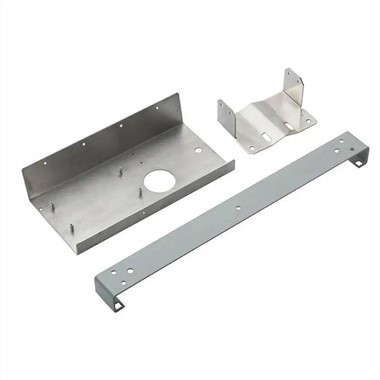
There are many types of metal brackets. Some are applied to the automotive industry, some are used
Add to Inquiry -
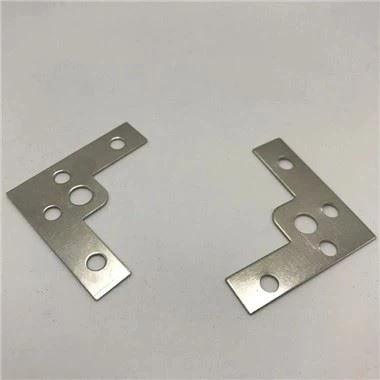
The flat metal bracket, as the name implies, are the brackets without forming angle. Mostly they
Add to Inquiry -
Right angle metal brackets are generally used as assembling structure parts, which play a role in
Add to Inquiry -
The angle metal bracket refers to brackets with a certain forming angle. Compared with right-angle
Add to Inquiry -
The shaft metal bracket is one of the installation brackets, which is used by fitting and mating
Add to Inquiry -
Metal mounting brackets are generally produced by using iron, aluminum, and stainless steel
Add to Inquiry -
The spring contacts with the electromagnetic and shielding effect that we make are made of
Add to Inquiry -
Leaf spring plate, as the name implies, is a leaf-shaped spring plate, which is mainly used in
Add to Inquiry -
The spring finger contact is a finger -shaped reed made of special alloy copper or stainless steel.
Add to Inquiry -
We are a professional manufacturer of producing and supplying customized electronic stamping parts,
Add to Inquiry







Customer Service
We earn your respect by delivering on time and on budget. We built our reputation on exceptional customer service. Discover the difference it makes.
The Company's Business Philosophy
People-oriented, quality first, sincere communication, honest management, and the spirit of continuous innovation, dare to challenge, self-reflection and self-revolution, provide customers with professional products and services
Expertise And Experience
Our team of experts have years of experience in delivering high quality services to our clients. We hire only the best professionals who have a proven track record of delivering exceptional results.
Quality Assurance
We have a rigorous quality assurance process in place to ensure that all our services meet the highest standards of quality. Our team of quality analysts checks each project thoroughly before it is delivered to the client.
Customer Satisfaction
We are committed to delivering high quality services that exceed our clients' expectations. We strive to ensure that our clients are satisfied with our services and work closely with them to ensure their needs are met.
One-stop service
We promise to provide you with the fastest reply, the best price, the best quality, and the most complete after-sales service.
Types of Metal Stamping
There are three major types of metal stamping techniques: progressive, fourslide and deep draw
Progressive Die Stamping
Progressive die stamping features a number of stations, each with a unique function.
First, strip metal is feds through a progressive stamping press. The strip unrolls steadily from a coil and into the die press, where each station in the tool then performs a different cut, punch, or bend. The actions of each successive station add onto the work of the previous stations, resulting in a completed part.
Fourslide Stamping
Fourslide, or multi-slide, involves horizontal alignment and four different slides; in other words, four tools are used simultaneously to shape the workpiece. This process allows for intricate cuts and complex bends to develop even the most complex parts.
Fourslide metal stamping can offer several advantages over traditional press stamping that make it an ideal choice for many applications. Some of these advantages include:
Versatility for more complex parts
More flexibility for design changes
As its name implies, a fourslide has four slides- meaning that up to four different tools, one per slide, can be used to achieve multiple bends simultaneously. As material feeds into a fourslide, it is bent in quick succession by each shaft that is equipped with a tool.
Deep Draw Stamping
Deep drawing involves pulling a sheet metal blank into the die via a punch, forming it into a shape. The method is referred to as “deep drawing” when the depth of the drawn part exceeds its diameter. This type of forming is ideal for creating components that need several series of diameters and is a cost-effective alternative to turning processes, which typically require using up more raw materials. Common applications and products made from deep drawing include:
Automotive components
Aircraft parts
Electronic relays
Utensils and cookware
Short Run Stamping
Short run metal stamping requires minimal upfront tooling expenses and can be an ideal solution for prototypes or small projects. After the blank is created, manufacturers use a combination of custom tooling components and die inserts to bend, punch or drill the part. The custom forming operations and smaller run size can result in a higher per-piece charge, but the absence of tooling costs can make short run more cost-efficient for many projects, especially those requiring fast turnaround.
Metal stamping techniques
The low-cost, high-speed, high precision manufacturing processes associated with metal stamping involve the application of diverse techniques, such as


Blanking
The blanking process involves the removal of a workpiece from primary material to create the desired form. Unlike punching, the removed workpiece becomes the desired shape or blank.
Punching
This technique refers to the use of a die and a punch to cut sheet metal into the required form. During punching, the punch enters the material attached to the die and dispels pieces of metal to create the desired form in the remaining workpiece.
Coining
This technique involves the placement of the material between a die and a press or punch. The material is squeezed with extreme force during the press stroke to generate fine features and tolerances on the surfaces of parts.
Bending
Bending refers to processes that form sheet metal into desired bent shapes, which are generally the L, U, or V-shapes. The bending process is applied above the material's yield point and around a single axis to form the desired shape.
Flanging
The flanging process involves the use of a die and a flange or flares produced by a flanging tooling section on a workpiece. The flange portion of the tooling and die form the desired shape in the workpiece.
Drawing/Forming
The drawing and forming stamping process involves the use of compressive force to form sheet metal into a cavity or produce a shaped form by wrapping the workpiece over the desired shape in the die.
Embossing
The embossing process involves the use of a die and a pressing or stamping machine to apply the shaped die onto the material. The embossed pattern or designed form is then imprinted on the workpiece.
Curling
The curling process is used to eliminate sharp edges or form sharp edges into hollow rings according to a specific design. Once performed, curling also increases the moment of inertia at the curled end of the workpiece.
Piercing
The piercing process involves punching or cutting out holes of closed shapes in a workpiece. The punched-out portion is discarded and the pierced pattern forms the end-use part.
These diverse metal stamping techniques are done individually and can be combined or done in multiple operations to form the intricate parts a project requires. The peculiarities of individual projects are the major determining factors when choosing which metal stamping techniques to apply.
For example, a simple bent design can be developed using bending while intricate tooling sections may combine flanging and piercing or any one of the other techniques outlined above.
How Metal Stamping is Applied
Metal stamping finds widespread applications across various industries due to its versatility and ability to produce high-quality, precisely shaped, and unique components.
Automotive Industry
It plays a vital role in the automotive manufacturing industry — producing components such as body panels, brackets, chassis parts, engine mounts, brackets, and suspension components. The process ensures the production of lightweight, durable, and structurally sound parts that meet stringent safety and performance requirements.
Aerospace Sector
Metal stamping also reached the heavens through the aerospace sector. Key components like aircraft structural parts, engine parts, brackets, and fittings can be fabricated with the process which ensures the production of lightweight parts with complex geometries while maintaining strength and durability, contributing to enhanced fuel efficiency and performance.
Electronics Industry
In the electronics industry, electronic devices (connectors, terminals, heat sinks, shielding components, and brackets) are widely used. Metal stamping made it possible for the precise fabrication of intricate parts required for electronic assemblies while ensuring proper electrical conductivity and durability.
Household Appliances
The process is also employed extensively in the manufacturing of household appliances like refrigerators, washing machines, ovens, and HVAC systems. It produces components such as panels, enclosures, brackets, and handles, providing both aesthetic appeal and structural integrity.
Healthcare Industry
In the medical field, devices such as surgical instruments, orthopedic implants, brackets, and connectors also have components that have undergone the metal stamping process ensuring the production of precise, sterile, and biocompatible parts critical for medical applications.
Construction Industry
And how can we forget the construction industry, where metal stamping products are present in structural and decorative components like brackets, connectors, fasteners, hinges, and cladding panels - to name a few Overall, the process allows the creation of durable, corrosion-resistant parts that meet the demanding requirements of the industry.
What Are the Types of Metal Stamping Processes
Metal stamping includes a number of possible distinct operations, each tailored to specific fabrication needs. Listed below are the most common operations carried out in metal stamping presses:

To Learn More, See Our Stamping Process Article
Punching
This process involves using a punch and die to cut holes or create openings in the sheet metal. It is widely used for creating perforations, slots, and openings in various products, such as automotive parts and electronics applications. Punching can create holes with precise size tolerances, with accuracy depending on the material kind and thickness, the hole size, and the quality and wear condition of the tooling.
Blanking
Blanking is akin to punching but focuses on cutting out the desired shape from the sheet metal rather than creating holes within a desired final shape. Steel blanking is a cost-efficient process for tailoring metal parts to specific needs, with continuous material feed-reducing setup and part handling. It minimizes waste through efficient part nesting and cuts shipping costs by sending just the net weight. Initially catering to the automotive and fabricating sectors, its adaptability to various industries is expanding due to the blanks' capacity to conform to the final part shape, making it increasingly attractive to a broader industrial spectrum.
Bending
Bending is the process of shaping sheet metal by applying force to deform it at specific angles. In press brake forming, a workpiece is placed over a die block, which molds the sheet into a shape by exerting both tensile and compressive stresses. Springback occurs post-bending, requiring over-bending to achieve the desired angle. Material type and forming method influence springback. Bending elongates sheet metal, measured as bend deduction from outer edges and bend radius on the inside, influenced by: die choice, material properties, and thickness. Additionally, items like tabs and channels are crafted through bending.
Coining
Coining is a metal-forming process that employs pressure to shape and harden the surface of a workpiece, creating precise forms and smoothing edges. This method reduces the need for secondary processes like deburring and grinding, saving time and costs. Coining finds applications in various industries, especially when intricate details and fine features are essential, such as in: coin production, badges, buttons, and precision components.
Embossing
Embossing involves creating raised or recessed designs on the surface of sheet metal. It is commonly used for decorative purposes on items like ornate panels. Precision in embossing ensures the desired aesthetic and tactile qualities.
Flanging
Flanging is the process of forming a raised edge or lip on a sheet metal component. It is employed in applications such as automotive panels and ductwork. The accuracy of flanging is to ensure proper sealing and structural integrity.


Here's a list of common metal stamping challenges:
Bursting: Ruptured surfaces may occur around holes or profiles due to worn punches or improper clearance, requiring tool maintenance or replacement.
Part Fracture: Part fracture can result from negative tonnage, often called reverse tonnage, which occurs when a punch breaks through the metal during cutting, exerting a downward force on both the punch and press assembly.
Scrap Web: Excess metal remnants between parts from worn or misaligned dies, requiring realignment and tool maintenance.
Burrs: Sharp raised edges caused by punch and die clearance, requiring deburring.
How Does Metal Stamping Compare to Other Metal Forming Processes
Stamping includes cutting and shaping metal sheets into simple shapes for high-volume production. Different metal forming techniques exist, each of which is appropriate for a particular need. Casting entails pouring molten metal into molds; forging shapes metal through compression; laser cutting utilizes lasers for precision cutting; 3D printing constructs material layer by layer; deep drawing produces complex shapes from sheets; hydrostatic forming employs pressurized fluid; and machining entails removing material with tools. Various project requirements will influence the decision.
What Are the Safety Considerations When Operating Metal Stamping Machines
A metal fabrication method involving moving machinery, sharp metal edges, and crushing force can present worker hazards. These include electrical shocks, pinch points, noise exposure, and flying debris. To reduce these dangers, operators should make sure to use the proper personal protective equipment (PPE), such as: safety shoes, goggles, gloves, and earplugs. Prioritizing safety while using metal stamping machines is essential. Operator education plays a large role in avoiding injuries.
Choosing Metals for Metal Stamping
Stamping requires a certain amount of knowledge of metals and how to work and shape them. The type of metal for a project depends on the desired outcome. Though metal is normally considered for stamping, other non-metal materials can also be shaped by stamping such as paper, leather, or rubber. Do it yourselfers and hobbyists use hand operated stampers for home projects and shaping non-ferrous metals.
Though there are thousands of metals that can be stamped, there are two general categories - ferrous and nonferrous where ferrous metals have iron and nonferrous do not. Nonferrous metals that are commonly stamped are aluminum, brass, bronze, gold, silver, tin, and copper. One of the factors that determines the formability of a metal is its carbon content, though carbon is only one of many factors.
Alloys, a compound of two or more metals, are commonly used in metal stamping. Each alloyed metal has special characteristics that has to be considered when being used for metal stamping. For example, non-standard alloys, such as beryllium nickel and beryllium copper, are excellent for metalworking, forming, and shaping musical instruments and bullets.
The shaping and forming of precious metals is an ancient process that goes back to the time of the Romans, Greeks, and Egyptians. What was once the work of highly trained and talented craftsmen has been transformed by modern stamping machines. Silver, gold, and platinum can be molded in intricate patterns with the use of dies and cutting tools. The skills of the craftsmen of years ago has been replaced by machines and technology.
Ferrous metals are ideal for forming components due to their durability, high tensile strength, and hardness. Low carbon metals have excellent formability and can be used for hardened machine parts and are very versatile.
As with any industrial process, careful planning and preparation are necessary when using metal stamping. The selection of the correct metal and the quality of the final product depends on the type and quality of the materials for the process.
Our Factory
Gingerm Industrial Co., Limited was found in August of 2016, who locates in Songgang Town, Bao'an District, Shenzhen City and occupies in area more than 1,000 square meters. We are close to the Shenzhen Bao'an International Airport, Shenzhen Airport Ferry Terminal and Shekou Ferry Terminal. Before that, we were a professional supplier of designing and manufacturing precision stamping dies for Electronic field, and then turned to engage in an ODM / OEM supplier with providing both the precision stamping dies and stamping parts. The tools and dies that Gingerm supplies includes but are not limited to progressive die, transfer die, compound die and stage dies(blanking, piercing, drawing, forming, trimming, etc.); The fields that Gingerm serves included and are not limited to electronic appliances, mobile phone appliances, new energy appliances, circuit board shields, Spring contacts, metal brackets and drawn parts.

Certificate

FAQ
We're professional metal stamping manufacturers and suppliers in China, specialized in providing high quality products with low price. We warmly welcome you to buy customized metal stamping made in China here from our factory.
steel lock washer, heavy duty angle bracket, die cast bracket